

PBL Is Right for the Brain, Gen Z, the Alpha Generation, and You!
- • David Sousa, in his book How the Brain Learns, tells us that for information to move into long-term memory, it must “make sense” and “have meaning.”
- • Middle and high school teachers report struggling with student engagement.
- • Gen Z reports not being engaged in school (NPR / Gallup). Now add the Alpha Generation: students who value authenticity, immediacy, autonomy, curiosity, and choice.
How will you engage today’s students?
Problem-, project-, place-, phenomena-, profession-, and pursuit-based learning . . . you pick one of the 6 Ps of PBL; your students will thank you. Solving real-world, authentic problems is engaging and lends itself to individualized education that meets each student’s needs.
Link Curriculum to Current Real-World Situations
PBL works at every level: from pre-K to post-graduate. Just consider the curriculum and look for the situations around you. Solve the problem of playground loneliness; create a new game; plan a class party; develop a campaign to help students stay safe on social media; design a green roof to lessen stormwater runoff; tackle an invasive species such as the pythons in the Everglades; tackle the problem of space debris; and on and on.
Enter March Madness!
More and more people today are watching college basketball: men’s and women’s. And those who follow March Madness regularly complain about the brackets!!! Why did this team get this seed #? Why is this team playing this team? And on and on. Could you use mathematics to create a better bracket algorithm? We wrote the PBL!!! (Download it here.)
PBL Works! I Have Personal Proof!
I started using PBL in 1978 when I was a teacher trying to energize my underperforming students. It was a hit! They were engaged and excited about class; I had the opportunity to teach them the content they needed to learn, and differentiate instruction. When the state tests came, they were now passing and, in fact, outperformed most of the rest of the students in using percentages (apparently a favorite topic of mine in facilitation, as I had to admit to my principal that I hadn’t gotten to that chapter before the test).
If you want to engage students, build durable skills, and raise student achievement, use PBL well!
Using PBL Well . . . to Get Results
Why do I say “well“?
If you simply give students a problem and let them run with it, they may not learn the content they need, and they may spend longer on a problem than they should. Here’s how you can use PBL well:
| 1. | Develop an authentic real-world problem; 3–5 weeks of curricular content. | Hook your students! |
| 2. | Launch the unit with a presentation of facts, images, and statistics. | Use the “whoa” factor to motivate students. |
| 3. | Provide a rubric to drive student action, with curricular goals clearly represented. | Provide a roadmap for success in mastering curricular goals. |
| 4. | Teach students to use the rubric to self-assess and determine next steps to tackle. | Provide the driver for student action. |
| 5. | Provide an activity list that offers several ways to learn the content. | Offer students autonomy and choice. |
| 6. | Minimize whole-group instruction; instead, provide small-group instruction on various topics. | Individualize instruction. |
| 7. | Facilitate! Check for comprehension, application, analysis, synthesis, and metacognition, asking “What if?” questions. | Teach! |
Key Shifts When Teaching Through PBL
Role of the Teacher — The teacher becomes a facilitator, offering few whole-group presentations, focusing not on “coverage” but on “learning.” The teacher is constantly engaged, moving around the classroom from student to student, group to group. From time to time, the teacher offers small-group lessons for targeted, direct instruction. Is this a natural shift? No, not after decades of prototypes that say the teacher is in the front of the room talking. But it can be accomplished with the right tools, such as content facilitation grids, facilitation questions, and a facilitation roadmap.
Role of the Student — The student takes greater responsibility for how, when, with whom, and where they engage in learning, making informed decisions based on data. Can students handle this responsibility from day one? No! But it can be accomplished with the right tools, such as rubrics, activity lists, how-to sheets, help boards, a Great Student Rubric, and more.
The Learning – Energy Continuum
Energy makes the world go around! Just as we study energy in science and think about it powering our homes and cars, you can study the energy of a classroom. You can feel an engaged classroom vs. a compliant classroom!
Mic Drop Moment
A client superintendent of schools texted me a mic drop, so I had to ask what that was all about. The story goes that she was in a fourth-grade Learner-Active, Technology-Infused Classroom and enjoying watching students manage their time and take charge of their own learning. She was sitting with a group and one student had to leave, so the group stopped working together and went on to other work.
One student opened up her textbook and the superintendent sighed, thinking they do these “projects” as an extra but the textbook comes first. So she asked the student the two questions I always recommend: what and why? She asked the student what she was working on and the student replied, “Estimation.” She then asked why she was learning that.
The student excitedly explained they were creating the ultimate Valentine’s Day party and the team that performed the best in design would get to run their party. She then pulled out a rubric and explained what they needed to do for a strong performance and that in the Expert column it said they needed to estimate all amounts before actually calculating them. She admitted she didn’t know how to estimate and pulled out the activity list to show the superintendent. She explained that she had all these ways from which she could choose to learn and she just thought the textbook would be the fastest way to learn estimation right now.
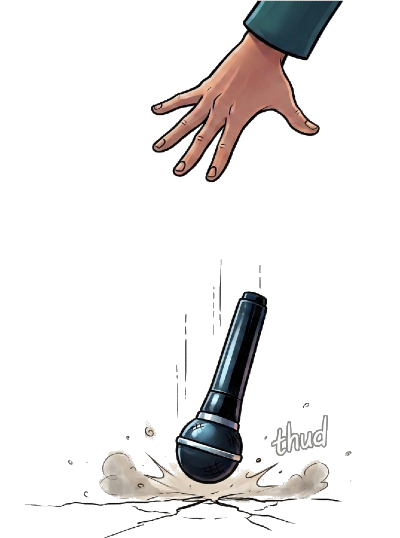
Mic drop!
The energy moves from the problem (I’m hooked!) to the rubric (I know what I have to learn) to the activity list (I know how to learn it). Students have options to learn through video, how-to sheets, small-group lessons, peer expert boards, help boards, and more. Most importantly, they make the choice (with strong teacher facilitation to ensure they make appropriate choices for their needs).
We Know Learning!
At IDE Corp., we like to say that we know learning! And we’ve developed in-person, remote, and virtual opportunities to take your classroom, school, or district to the next level.
- – A school-wide subscription to our online, on-demand Professional Learning Experiences (PLEs) can build a culture of professional learning around topics such as PBL (see video), student agency, executive function, supporting ELLs, and more.
- – Individual teachers and administrators can attend our remote Virtual Learning Communities: 5-week courses engaged with a consultant and others to develop actionable strategies to use in the classroom.
- – MyQPortal provides teachers with hundreds of problem-based tasks and hundreds of instructional tools at the low cost of $995 per school.
- – My books become step-by-step guides for rethinking classrooms and schools.
- – And, of course, a conversation with Nicole (Nik) Koch, our Chief Brand Officer, can allow you to explore your school’s or district’s needs to develop a customized solution for you to take learning to the next level. Email or call (201-934-5005.)