

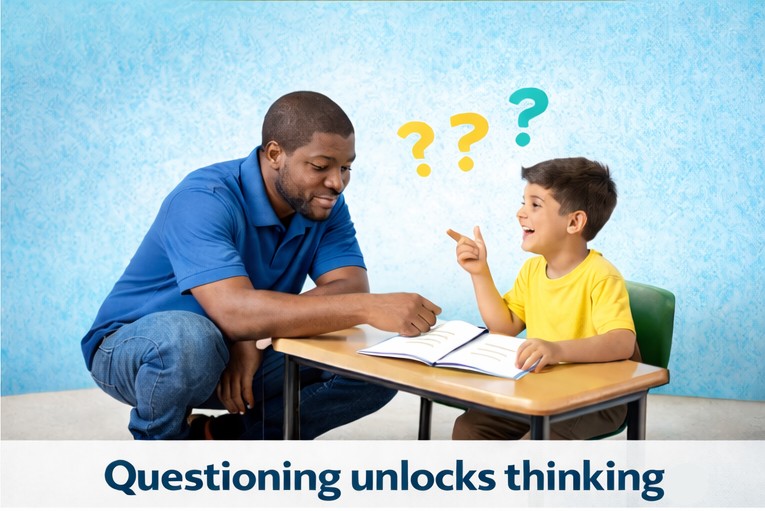
When classrooms emphasize questioning at these levels, students don’t just finish lessons; they own the learning. And that ownership is what shows up on assessments.
For a more in-depth look, visit MyQPortal and access the free content on five levels of facilitation questions; listen to my 9-minute podcast on this.
With a focus on standardized test performance, many schools feel pressure to “cover” more content, reteach standards, and prepare students for assessments. Ironically, this pressure often leads to more whole-class instruction, more pacing urgency, and less student thinking, just when students most need to deepen understanding.
But tests don’t measure teachers’ coverage; they measure students’ mastery. And mastery is strengthened through students’ active thinking, explaining, connecting, and applying learning.
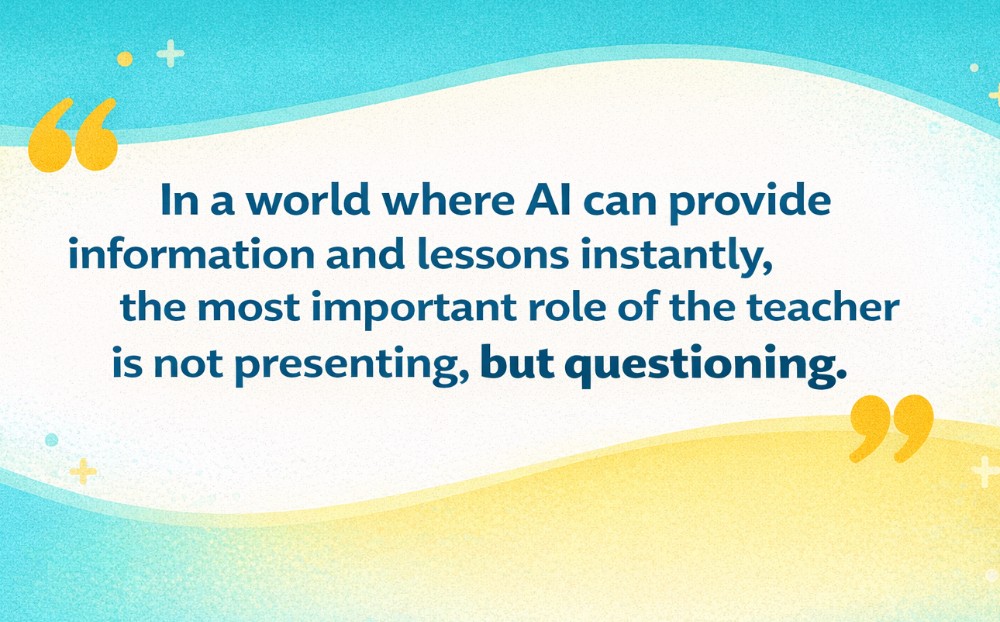
In a world where AI can provide information and lessons instantly, the most important role of the teacher is not presenting, but questioning. Let me say that again:
Unlocking potential through questioning is the first step in the quest for student “choice and voice.” Choice empowers students to make decisions about their own learning path; voice engages them in designing the learning environment.
But before students exercise choice and voice, they must become comfortable with expression: sharing ideas, thinking aloud, asking questions, and reflecting on learning. So I like to talk about student expression, choice, and voice. This post will focus on promoting student expression: getting students talking intentionally about content. Use the following three approaches to increase student expression as a first step toward greater student-driven learning through choice and voice.
I. Unlocking the Potential of Content
Modern standards have ushered in an era of understanding and application of content. Memorization alone does not prepare students for assessments or real life. Students must use what they learn.
We use the Five Levels of Facilitation Questions to unlock the potential of content to make a difference in one’s life:
- • Comprehension – demonstrating a basic understanding of the content
- • Application – using the learning in new situations
- • Connection – relating content to personal experience
- • Synthesis – creating new ideas or solutions
- • Metacognition – reflecting on one’s own thinking
II. Unlocking the Potential of the Learner
Learning success depends not only on content knowledge but also on confidence, resilience, and executive function skills.
Facilitators must respond to how students experience learning:
- • If frustration appears, provide direct support to rebuild confidence.
- • If students are stuck but trying, offer prompts or resources.
- • If success occurs, celebrate and pose the next challenge.
Mastery grows when students experience success and stretch, not when they passively receive instruction.
Our Facilitation Roadmap helps teachers make these decisions in real time to guide teachers in their role as facilitators.
For a more in-depth look, visit MyQPortal and access the free content on the Facilitation Roadmap; listen to my 11-minute podcast on this.
III. Unlocking the Potential of the Teacher/Facilitator
Teachers still teach, but their greatest impact now comes from facilitation!
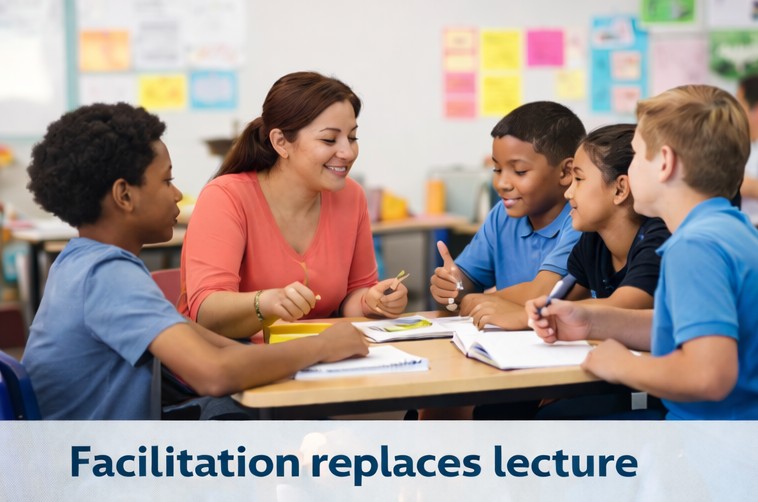
Instead of delivering answers, teachers design thinking experiences.
How can teachers develop, as we like to say at IDE Corp., “Teachers’ Superpowers” to facilitate discussions? We recommend invoking four superpowers as students engage in discussions around content:
- – Explorer – Encourages students to share ideas
- – Analyst – Asks questions that promote deeper levels of thinking
- – Synthesizer – Clarifies, summarizes, and solidifies learning
- – Catalyst – Poses “what if …?” and “how about …?” questions that will launch students toward the next challenge
When teachers shift cognitive work to students, mastery follows.
For a graphic organizer, visit MyQPortal and access the free content on teachers’ Using Our Superpowers; listen to my 10-minute podcast on this.
A Simple Strategy to Try Tomorrow
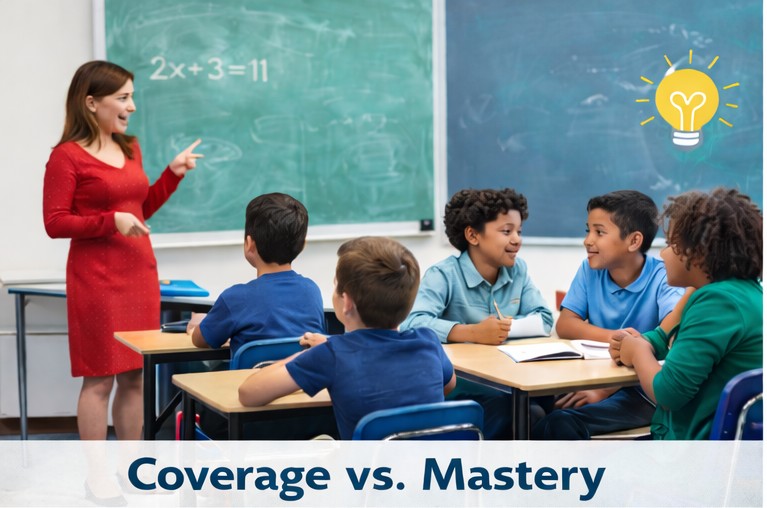
To shift from coverage to mastery:
- • Ask students: How do you know?
- • Have students question each other.
- • End lessons with: What surprised you today?
Small questioning shifts produce powerful thinking shifts.
Coverage Ends But Mastery Lasts
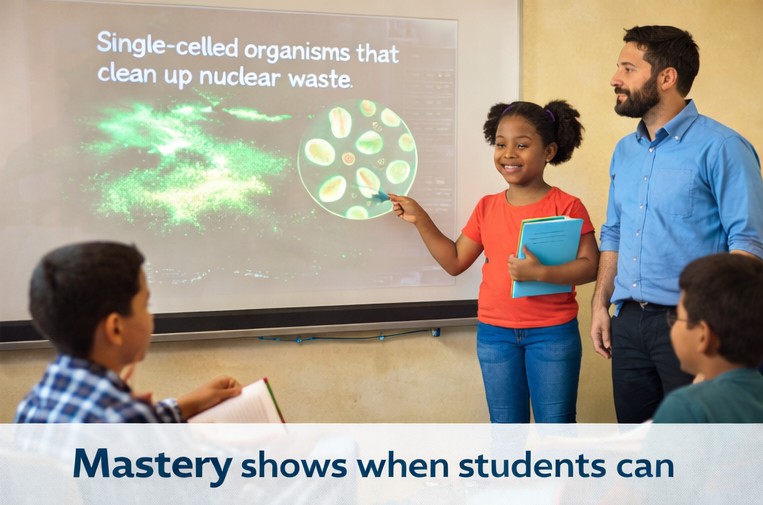
Coverage may get you through pacing guides. Mastery prepares students for assessments and life beyond them.
In an era when answers are everywhere, questioning becomes our most powerful instructional tool.
And it begins by unlocking student expression.
IDE Corp.provides on-site and remote consulting services in the areas of questioning, student choice and voice, and student-driven learning environments. EdQuiddity Incprovides online professional learning opportunities and resources in these areas developed by the consultants at IDE Corp., including online, self-paced professional learning experiences for full-faculty engagement, and five-week, online courses on key topics, including engagement with consultants and educators from other schools and districts.
For more information, reach out to us at solutions@idecorp.com.