

Choice and Voice: A Must-Have!
Student choice and voice are widely valued concepts in schools today, but what does voice actually look and sound like in practice?
Choice is relatively easy to conceptualize. Students may have choices about when they complete work, with whom they collaborate, where they work in the classroom, or how they engage with content through differentiated activity paths. Some classrooms even stretch into the more challenging territory of allowing students choice in what they learn or why it matters.
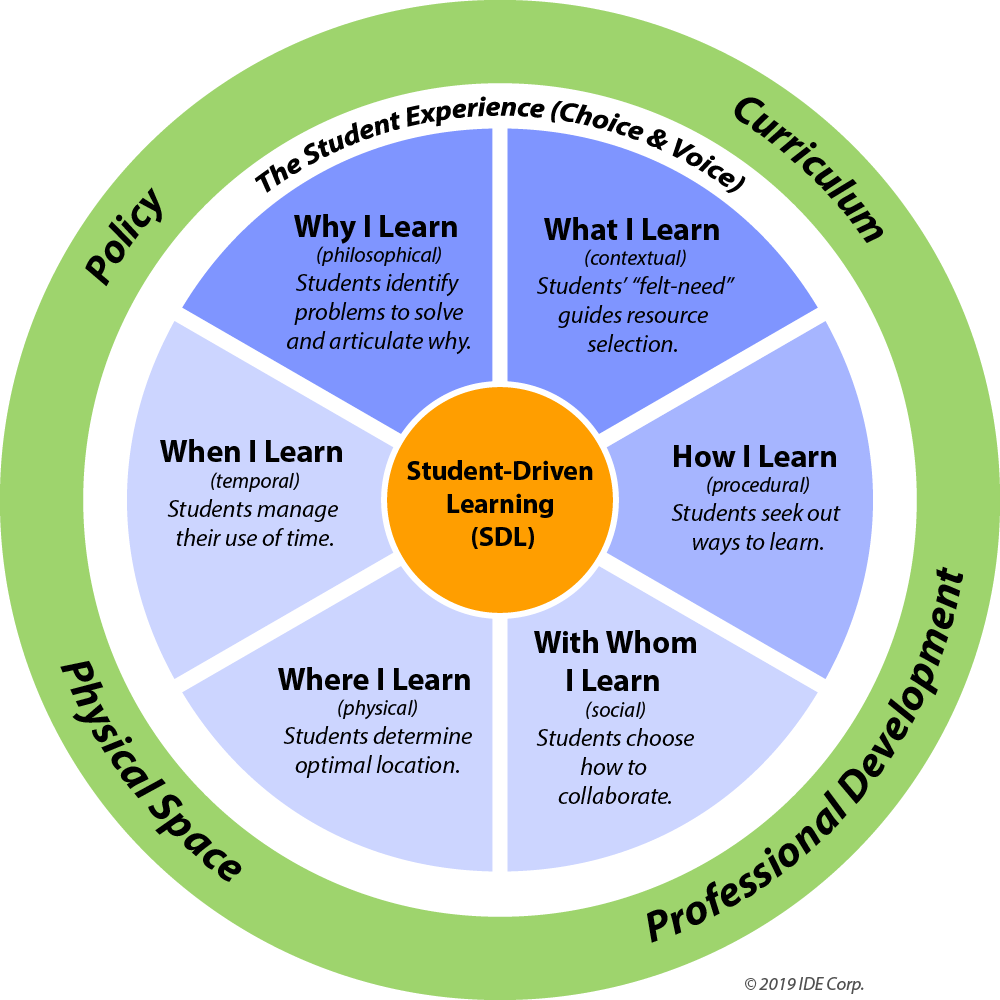
Voice, however, is far more difficult to define—and even harder to implement with intention. So let’s clarify it.
Getting to the Heart of Student Voice
Voice does not mean students talking more.
Increasing discussion, collaboration, and group work is critically important, particularly in today’s classrooms, but those practices alone reflect engagement, not voice. Engagement is about participation. Voice is about influence.
Making choices is an important starting point, but developing voice requires something more cognitively demanding: the ability to shape decisions, make recommendations, justify ideas, and help determine the path forward. Voice is not about increasing the amount of student talk; it is about increasing students’ role in shaping the learning experience itself.
Voice means inviting students to co-create the classroom environment. It means empowering them to make suggestions, propose alternatives, and participate meaningfully in decisions about how learning unfolds. It is not permissiveness, nor is it a lack of structure; voice is responsibility. It asks students to think beyond themselves and consider the shared outcomes of a learning community.
Stories from the Field
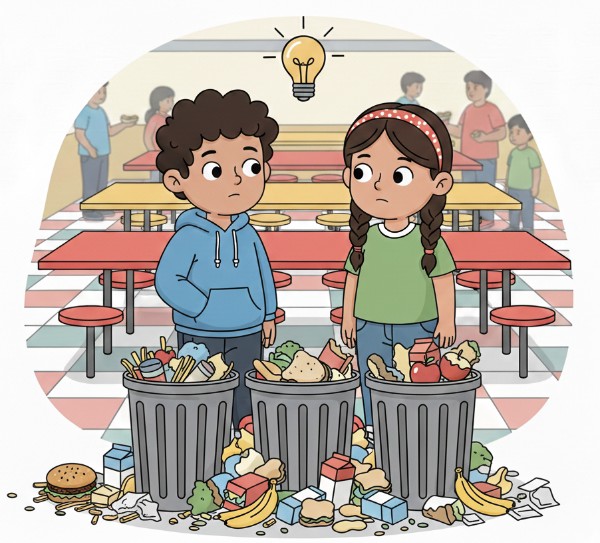
An elementary school principal had students make suggestions as to what can be improved in the school. A fourth-grade teacher saw the poster-paper list and took it to her class. She asked students if anyone wanted to tackle any of these issues as their problem-based task (PBL). Two students noted the complaint that too much food is thrown out over lunch and took on that challenge. They surveyed students, determined their dining preferences, and made a pitch to the food director, who then added new menu items to the lunch choices. Their “voice” changed the lunchroom!

A middle school science teacher was about to launch a PBL on colonizing Mars. As luck would have it, the news was reporting on recent findings of evidence of water on Mars, so the teacher had this broadcasting as students came in the room. After she introduced the PBL, a student approached her and said that there is also evidence of water on Neptune’s largest moon and asked if it would be okay if his project focused on that. The teacher agreed! This student’s “voice” was heard and respected.
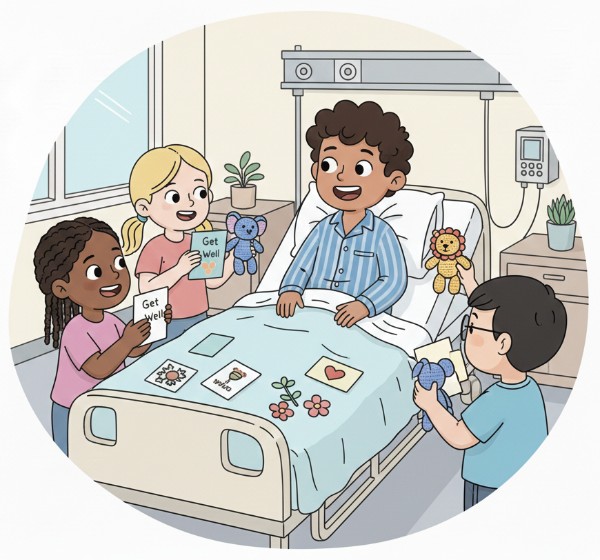
A first-grade student came into class with news that his neighbor, a fellow student, was in the hospital. The teacher knew this information was correct. The student asked how they could make him feel better and the teacher turned to the class with the question. They generated a variety of ideas, from cards to homemade gifts to stuffed animals. The teacher then set aside what they were about to tackle and instead used this PBL, through which she could still address her ELA and math skills. Students’ voices made a difference.
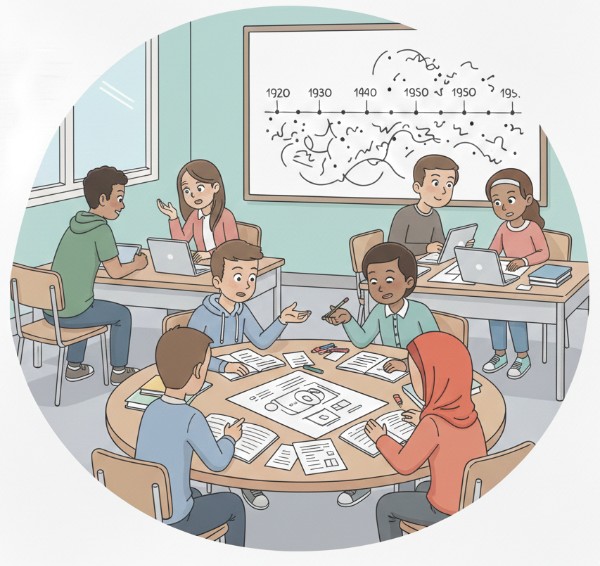
The end of the year was approaching, and the curriculum content for social studies ran from the 1920s to the 1950s. What PBL might fit for that time period? The teacher decided to give that challenge to her students. She shared an introduction to the content with a timeline of key events over this time period. She then shared the common lenses through which one could view any time period, such as economy, politics, religion, the arts, jobs, and recreation. She asked students to work in groups and pose an interesting question that spanned this time period and connected to the modern day. She texted me a picture of students intensely working and said it felt like an IDE workshop where teachers are working hard to write their PBL units. The students developed their own unit PBLs through their voices.
What Silences Student Voice?
Across the nation, and globally, test scores are declining. At the same time, executive function skills, which are foundational to achievement, are underdeveloped for many students. In response, schools often conclude that students cannot handle much independence without significant teacher control. The result is an increased reliance on whole-class instruction and tightly managed learning experiences.
Though well-intentioned, this control-oriented approach unintentionally minimizes both voice (co-creation) and voices (authentic student contribution). When classrooms prioritize coverage and compliance, students practice following directions. They do not practice agency. This contradiction has consequences beyond school.
In a world where automation and artificial intelligence are rapidly reshaping the workforce, success increasingly depends on agility, initiative, decision making, and self-direction. These are not skills developed through prolonged whole-class instruction. They are built when learners are trusted to plan, evaluate, reflect, and influence outcomes: skills that must be practiced regularly and intentionally.
If we want students to become capable thinkers and self-starters, classrooms must become places where students practice influence (voice), not just participation.
10 Ideas for Increasing Student Voice
If you’re ready to take concrete steps toward co-creation, consider starting here:
- Invite alternatives. When presenting an assignment or project designed to demonstrate content mastery, invite students to propose an alternative approach and explain how it would meet the same learning goals.
- Create a suggestion channel. Maintain a physical or digital suggestion box where students can offer ideas for improving the learning environment, instructional flow, or classroom routines.
- Co-construct assessment tools. If you use rubrics, invite students to add a row that reflects an additional criterion that they believe matters.
- Build norms together. Rather than beginning the year with a list of predetermined rules, engage students in designing shared norms for learning and collaboration. (Related blog post.)
- Design a “Great Student” rubric. Individually or collectively, have students define what effective learning behaviors look like and how those behaviors support the community.
- Reimagine the physical space. Ask student groups to redesign the classroom layout, determining where different types of learning should occur. Rotate designs across the year so students experience multiple configurations.
- Co-create success criteria. Before starting a task, ask students to identify what strong work would look like. Use their input to establish shared success indicators.
- Generate driving questions. Invite students to help shape the questions a unit or project will aim to answer, and revisit those questions as learning evolves.
- Pause for course correction. Midway through a unit, ask students what is working, what isn’t, and what adjustments would improve learning, and visibly act on their feedback.
- Design reflection together. Instead of always providing reflection prompts, have students write the questions they believe are most important for evaluating growth and understanding.
The Shift from Compliance to Influence
Student voice does not emerge from loosening expectations. It emerges from deliberately shifting who has influence in the learning process.
When students help shape how learning happens, they are no longer simply present in the classroom; they are invested in it.
Images by Gemini; blog by me!
IDE Corp. specializes in designing learning environments that increase student agency. (Check out our “makin’ the point” video.) Our multi-year, workshop-coaching balance helps teachers shift not just their instructional strategies, but, more importantly, their mindsets as to the emerging roles of teachers and students in Future-Powered Classrooms (TM). For more information, contact solutions@idecorp.com.
Help all educators in a school embrace the use of PBL, increase student agency, or build executive function through our online, on-demand professional learning experiences.